


Vietnam White Marble for Temple Architecture & Sacred Architectural Details
Vietnam White Marble is valued for its clean appearance, crystalline character and suitability for detailed architectural and sculptural applications. Kundan Shilp evaluates marble selection according to temple design requirements, intended application, fabrication needs and project scale.
Material Specification ARCHITECTURAL ADVISORY
- Material Classification
- Natural Metamorphic Marble
- Common Source Region
- Luc Yen, Yen Bai, Vietnam
- Visual Appearance
- White crystalline, subject to block variation
- Fabrication Adaptability
- Suitable for selected carving & CNC work
- Primary Applications
- Flooring, wall lining, jalis & accents
- Quality Selection
- Project-specific block inspection required
What Is Vietnam White Marble?
Vietnam possesses extensive natural white marble reserves that have gained prominence across international architectural markets over recent decades. Geologically formed through intense metamorphic crystallization of ancient limestone deposits, natural Vietnam white marble stone exhibits a distinctive crystalline structure with varying degrees of grain compactness and light transmission.
In architectural stone masonry, the northern province of Yen Bai—particularly the Luc Yen district—is widely associated with white crystalline marble quarrying and fine artisanal stone crafting. Blocks extracted from these geological formations range from milk-white tones with subtle structural character to uniform pale surfaces suited for modern polished interiors and ornamental panels.
However, it is critical for temple trusts, patrons, and architects to recognize that natural marble characteristics are not identical across all quarries. Physical density, hardness, vein distribution, and sound resonance vary significantly between quarry layers, extraction blocks, and processing lines. Rather than relying solely on the broad commercial label “Vietnam White Marble,” sacred temple architecture demands rigorous, application-specific material evaluation to ensure lasting structural stability and spiritual resonance.
Architectural Principle: In sacred temple design, stone selection is governed by specific element requirements—such as load-bearing capacity, pedestrian wear resistance, and chiseling response—rather than generic commercial nomenclature.
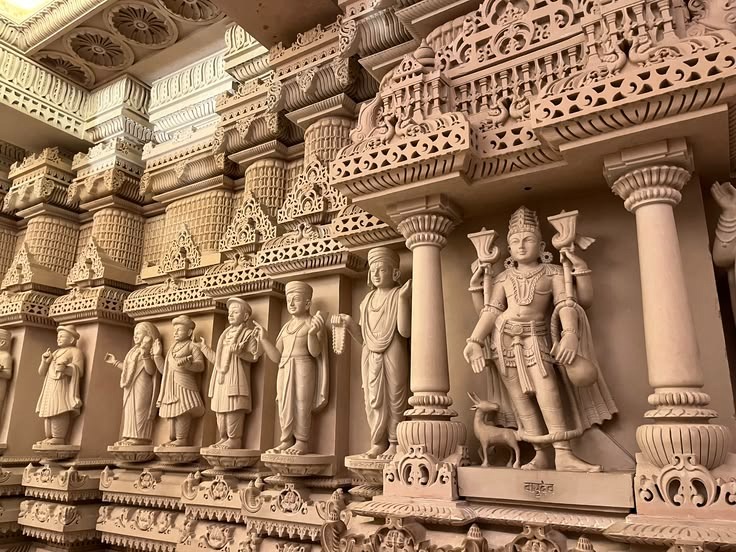
Luc Yen White Marble from Yen Bai, Vietnam
Understanding the geographic provenance of natural stone is essential for evaluating mineral consistency, quarry capacity, and artisanal heritage.
Geographic Context of Luc Yen
Luc Yen district in Yen Bai Province, northern Vietnam, is situated in a mountainous karst terrain rich in high-grade calcitic deposits. It represents one of Southeast Asia's foremost geological belts for natural white marble extraction and processed decorative stone.
Local Stone Carving Heritage
The region has developed a recognized tradition of stone craftsmanship, where local artisans produce decorative statuary, ornamental architectural screens, and finely polished slabs utilizing both manual tools and diamond-gang equipment.
Block Selection & Detailing
Selected blocks from Luc Yen quarries display a fine crystalline grain matrix that responds well to intricate diamond profile tooling and multi-axis CNC milling, enabling crisp geometric friezes and ornamental border carvings.
Architectural Origin Note
Vietnam White Marble is a broad commercial description encompassing multiple quarry zones, including Luc Yen and Quy Hop. Exact characteristics—such as crystal grain size, tensile resistance, and vein patterning—depend directly on the quarry stratum, specific extraction block, and slab processing methods. Material origin and technical documentation should always be confirmed for each individual temple project lot.
Vietnam White Marble Characteristics for Temple Applications
Sompura sthapatis evaluate architectural stones based on rigorous performance parameters rather than generic commercial marketing claims. Key physical and visual factors include:
Visual Consistency & Tone
High-grade selection lots display a remarkably consistent, bright white background with muted or minimal vein interference, producing broad monolithic surfaces across sanctum walls and spacious mandapa interiors.
Crystalline Matrix & Texture
The metamorphic grain structure is typically compact and fine-to-medium crystalline. This micro-texture diffuses ambient natural and warm temple lighting softly, preventing harsh glare in sacred gathering spaces.
Surface Finish Adaptability
Responds exceptionally well to mirror diamond polishing, fine matte honing, and satin leather finishes. Honed and leathered finishes provide slip-resistance for indoor ambulatory paths while preserving stone character.
Carving & Milling Response
Sound, un-fissured blocks allow sharp edge retention during CNC profiling and manual chisel finishing, making it suitable for geometric jali screens, ornamental ceiling rosettes, and wall relief borders.
Selective Translucency
Certain fine-grained translucent slabs, when calibrated to specialized thicknesses (15–18mm), permit soft backlighting, enabling illuminated decorative alcoves and sanctum deity background halos.
Maintenance Considerations
As a calcitic marble, it requires appropriate penetrating impregnators and pH-neutral maintenance practices in temple environments to protect against ritual turmeric, vermilion (kumkum), and oil contact.
Vietnam White Marble Applications in Temple Architecture
From sanctum meditation surfaces to ornamental carved screens, discover how Vietnam white marble is integrated into sacred temple spaces based on engineering suitability:
Temple Flooring
Expansive polished or honed floor slabs for indoor sabha mandapas, prayer halls, and circumambulation corridors, creating an unbroken, serene white expanse.
Interior Wall Cladding
Full-height vertical marble wall panels in sanctum corridors, pradakshina pathways, and inner chambers, maximizing interior luminosity and visual calm.
Jali & Decorative Panels
Intricate perforated stone lattice screens (jalis) crafted via CNC milling and hand-finished for ventilation, sacred privacy, and backlit halo panels.
Temple Pillars & Cladding
Ornamental column encasements, fluted pillar casings, and decorative capitals that enhance mandapa elegance subject to structural core engineering.
Sacred Sculptures & Reliefs
Relief panels, parikrama wall murals, niche statuary, and decorative devtas sculpted from selected, uniform fine-grain blocks under Sthapati guidance.
Mandapa Ceiling Rosettes
Coffered ceiling rings, inverted lotus medallions, and ornamental cornice moldings accentuating dome apexes in contemporary mandapas.
Decorative Inlay Borders
Precision-cut marble border bands, threshold strips, and Pietra Dura floral inlays pairing white marble with semi-precious stone accents.
Custom Stone Carving
Tailored architectural components including decorative torana frames, niche pediments, consecrated pedestals, and sanctum door jamb architraves.
Choosing Vietnam White Marble for Different Temple Elements
Every structural and decorative element within a sacred temple imposes unique physical, abrasive, and artistic demands. Use this matrix to guide material evaluation:
| Temple Element | What to Evaluate Before Specification |
|---|---|
| Mandapa & Sanctum Flooring | Evaluate surface finish (honed vs mirror-polished for slip-safety), abrasive hardness against barefoot traffic, slab thickness (typically 20–30mm), and dry-lay color consistency across large square-meter expanses. |
| Temple Pillars & Columns | Block volume capacity, absence of shear planes, structural core engineering requirements (reinforced concrete or steel core with marble encasement), grain alignment, and lathe turning tolerances. |
| Interior Wall Cladding | Calibrated slab thickness consistency (18–20mm), dry-fixing anchor mechanical systems, moisture-resistant backing, and vein/tone continuity across adjacent panels. |
| Jali & Lattice Screens | Tensile cohesiveness to prevent micro-fracturing during fine diamond fretwork, slab thickness (25–40mm based on span), perimeter frame anchoring, and light transmission if backlighting is planned. |
| Relief Murals & Sculptures | Microcrystalline compactness, sound resonance under mallet impact, lack of brittle inclusions, block dimensions, and responsiveness to fine facial chiseling. |
| Decorative Moldings & Borders | Precision waterjet or CNC profiling edge tolerance, corner miter integrity, surface smoothness, and compatibility with adjoining stone substrates. |
Vietnam White Marble for Temple Stone Carving
The realization of intricate temple ornamentation requires harmony between material characteristics and stone-shaping techniques. In contemporary temple construction, Kundan Shilp bridges traditional craftsmanship combined with modern fabrication methods to achieve exceptional sculptural fidelity in Vietnam white marble.
Selected calcitic marble blocks from Luc Yen provide a homogeneous matrix that can be profiled using high-precision 5-axis CNC diamond routers for initial depth excavation, geometric lattice perforations, and architectural mouldings. However, machine processing represents only the preparatory stage.
The spiritual soul, delicate facial contours, floral undercut drapery, and final surface texturing are accomplished entirely by our master Sompura sculptors using traditional hardened hand chisels and diamond rasps. This synergy guarantees structural precision while preserving the living artistic spirit demanded by sacred architecture.
CNC Roughing
Digital 3D toolpaths ensure mathematical symmetry in jali grids and large reliefs.
Sompura Hand Chisel
Generational artisans hand-carve sacred expressions, undercuts, and fine textures.

How We Select Vietnam White Marble for Temple Projects
To safeguard temple trusts and patrons against inconsistent lots and structural flaws, Kundan Shilp enforces a methodical 5-step material selection protocol:
Project Requirement Review
Analyze architectural drawings, mandapa floor plates, sanctum dimensions, structural loads, footfall expectations, and climatic exposure.
Material Requirement Planning
Formulate volumetric bills of quantities, distinguishing block sizes needed for 3D carvings from calibrated slab thicknesses for wall claddings and floors.
Block & Slab Inspection
Examine rough blocks and processed slabs for internal blind cracks, schistose planes, color banding, sound resonance, and structural homogeneity.
Fabrication Compatibility
Conduct test cuts and diamond profiling to confirm whether selected lots respond predictably to CNC relief milling, fine chiseling, or polish finishing.
Final Application & Quality Review
Dry-lay matching before dispatch, ensuring tone continuity across assemblies, verifying edge profiles, and advising on project installation methods.
Vietnam White Marble vs Other Marble Options for Temple Projects
Material suitability depends on temple architectural style, project location, specific architectural element, surface finish, availability, budget, fabrication requirements, and structural specifications. Below is an objective comparative evaluation:
| Material | Typical Visual Character | Potential Temple Applications | Key Selection Considerations | Project Suitability |
|---|---|---|---|---|
| Vietnam White Marble Yen Bai / Luc Yen, Vietnam | Pristine white with crystalline sparkle; subtle to minimal veining depending on grade. | Flooring, interior wall claddings, backlit jalis, modern mandapa rosettes, accents. | Import logistics, quarry batch variation, calcinated structure requires correct impregnators. | Contemporary temple interiors, luminous sanctums, precision CNC work. |
| Makrana White Marble Nagaur, Rajasthan | Pure milk-white to grey-veined; interlocked calcitic structure with deep natural luminance. | Sanctum deity murtis, primary garbhagriha, sacred thresholds, centuries-grade monuments. | Premium cost, selective block yields, revered canonical prestige in Shastras. | Centuries-old sacred structures, traditional murtis, iconic grand temples. |
| Ambaji White Marble Banaskantha / Sirohi | Fine-grained warm white with soft clouded grey or pale green whispers. | Traditional Maru-Gurjara shikharas, ornate mandapa pillars, jali filigree, bracket figures. | Renowned carving plasticity, historic association with Dilwara and Somnath. | Complex hand-chiseled temple carving, Maru-Gurjara & Jain temple architecture. |
| Kumari Marble Rajasthan Belt | Off-white to ivory base with grey, green, or light brownish figure patterning. | Parikrama pathways, community temple halls, durable walkways, utility steps. | High volume availability, cost-effective for large square footage, resilient. | Expansive community temple flooring and budget-optimized construction. |
| Rajnagar Marble Rajsamand, Rajasthan | White to pale grey base with linear bands, cloudy waves, and directional movement. | Vast courtyards, monumental podiums, heavy structural columns, trust facilities. | Huge quarry scale, reliable block continuity across multi-acre complexes. | Monumental temple complexes requiring massive multi-acre stone continuity. |
Looking to evaluate stone compatibility for your specific temple layout and aesthetic vision?
Request Material Selection Guidance →Vietnam White Marble in Traditional Temple Architecture
Classical Indian treatises on sacred architecture—such as the Aparajitaprccha, Mayamata, and Prasada Mandana—establish profound guidelines governing spatial geometry, Ayadi calculations, pillar proportions, and sacred ornamentation. These ancient texts specifically categorise stones based on density, tonal resonance (dhwani), gender polarity (pum-shila, stri-shila, napumsaka-shila), and structural sound-ness.
It is essential to clarify that ancient Shilpa Shastra texts do not specifically mention or prescribe Vietnam White Marble, as geological terminology and regional trade routes in antiquity were rooted in indigenous quarries across Bharat.
However, Kundan Shilp's master Sompura sthapatis apply the foundational principles of Shilpa Shastra when evaluating contemporary material options. By assessing crystalline density, ring tone under mallet test, crack freedom, and chromatic purity, we verify whether selected Vietnam marble lots align harmoniously with traditional mandapa proportions and sanctum aesthetics.
Shastric Stone Examination
How Sompura masters harmonize classical guidelines with modern material selection:
- • Resonant Sound (Dhwani): Tapping rough blocks to ensure clear, bell-like timbre indicative of structural density and fissure absence.
- • Chromatic Tranquility: Selecting serene, uniform white slabs that foster meditative stillness in inner sanctums.
- • Vastu & Ayadi Proportions: Ensuring all carved panels, door frames, and mandapa grids adhere precisely to mathematical canons.
Vietnam White Marble Temple Applications & Project Planning
Kundan Shilp provides end-to-end architectural consultation, material selection, and fabrication coordination for temple trusts and patrons considering Vietnam white marble:
Sanctum Interior Cladding
Planning full-height mirror-matched or vein-less white marble claddings for inner sanctum chambers, meditation rooms, and circumambulatory corridors.
Scope: Planning & Block SourcingBacklit Architectural Jalis
Custom-engineered translucent lattice panels designed to accommodate warm concealed LED backlighting behind deity altars and parikrama niches.
Scope: 3D Modeling & CNC DetailingContemporary Temple Flooring
Evaluating large-format calibrated slabs for indoor temple sabha mandapas, ensuring dry-lay consistency, slip-resistance, and seamless installation.
Scope: Specification & Dry-Lay MatchingWhy Material Selection Matters in Temple Architecture
A sacred temple is consecrated to stand for generations as an eternal sanctuary of spiritual communion. In temple architecture, stone is not merely a surface finish—it is the living body of the monument.
Superficial material choices based purely on showroom appearance often lead to devastating failures, including subsurface cracking, discolouration from ritual liquids, edge spalling under seismic thermal cycles, and slippery walkways. Responsible temple architects assess the complete material journey: quarry source integrity, block extraction stratum, fabrication methodology, architectural detailing, physical installation systems, and long-term maintenance protocols.
Architectural Expert Note
“Material selection for temple architecture is not based on appearance alone. Block quality, dimensions, visible defects, finish, fabrication method, intended architectural element, logistics and project-specific specifications all influence the final selection.”
Sompura Sthapatis
For centuries, our family lineage has practiced sacred temple architecture, blending canonical Shastric scriptures with generational mastery in stone selection and artisanal sculpting.
Connect with Our SthapatisFrequently Asked Questions About Vietnam White Marble for Temples
Comprehensive answers to assist temple trusts, architects, and patrons in evaluating material suitability.
1. What is Vietnam White Marble?
2. Where does Vietnam White Marble come from?
3. Is Vietnam White Marble suitable for temple architecture?
4. Can Vietnam White Marble be used for temple stone carving?
5. Is Vietnam White Marble suitable for temple flooring?
6. How does Vietnam White Marble compare with Makrana Marble?
7. How does Vietnam White Marble compare with Ambaji Marble?
8. What should be checked before selecting Vietnam White Marble for a temple project?
9. Can Vietnam White Marble be used for temple pillars and architectural elements?
10. What technical tests should be requested before purchasing Vietnam White Marble?
Plan Your Temple Project with Vietnam White Marble
Discuss marble selection, architectural applications, carving requirements and project-specific material planning with the Kundan Shilp team.