


Temple Architecture Materials & Natural Stone Collection
The permanence of a sacred temple begins in the earth. Kundan Shilp curates India’s most revered geological deposits—from sanctum-grade Makrana and Ambaji marbles to monumental Bansi Paharpur pink stone and Dhrangadhra quartzitic sandstone—engineered according to classical Shilpa Shastra acoustic and structural mandates.
Sompura Selection Code SHILPA SHASTRA
-
Pum-Shila (Masculine): Resonant bell tone; selected for core load pillars, sanctum framing & deity murtis.
-
Stri-Shila (Feminine): High-definition workability; ideal for ceiling rosettes, jali panels & toranas.
-
Napumsaka-Shila (Neutral): Dense mass matrix; reserved for adhisthana plinths & foundational upapithas.
Selecting Stone for Millennial Longevity
A temple is not merely a structure; it is an energetic organism designed to withstand centuries of weathering, cyclical expansion, and ritual offerings. We evaluate raw quarry blocks on petrographic stability, grain density, compressive resistance, and chemical reactivity to sacred liquids like milk, honey, and gangajal.
Quarry-Face Ultrasonic & Acoustic Testing
Every stone block is tested at the extraction bed using traditional ringing hammer acoustics and ultrasonic pulse velocity to detect hidden fault lines, blind joints, or micro-cracks before dispatch.
Natural Interlocking Dry-Jointing
Our masonry adheres to traditional Mortise & Tenon stone joinery and dowel interlocking. Material density must perfectly match joint shear calculations without synthetic binders or prone mortars.
Climate Adaptation & Patination
We analyze macro-climatic conditions at the temple site—such as freeze-thaw cycles, monsoon deluge, or coastal salinity—to recommend stone varieties that form protective natural patinas over centuries.
The Sacred Marble Collection
Crystalline metamorphic rocks renowned for low water absorption, smooth tactile resonance, and transcendent brilliance inside temple mandapas.
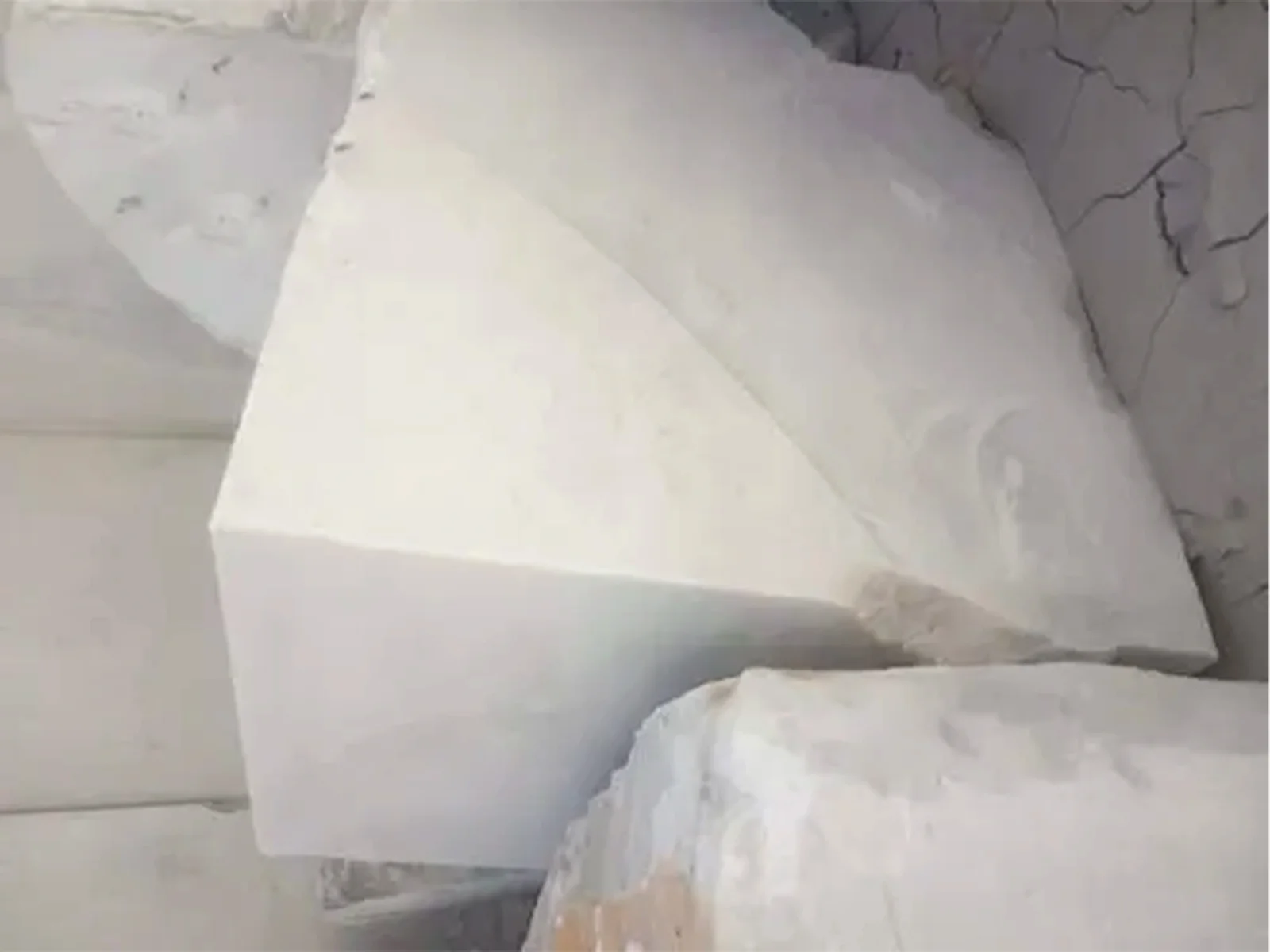
Makrana Marble
The gold standard of Indian temple architecture. Unmatched chemical impermeability against ritual abhishekam liquids, non-yellowing crystal matrix, and eternal sacred brilliance.
- Best For: Garbhagriha, Deity Pedestals, Mandapa Pillars
- Texture: Fine crystalline, low porosity (<0.1%)
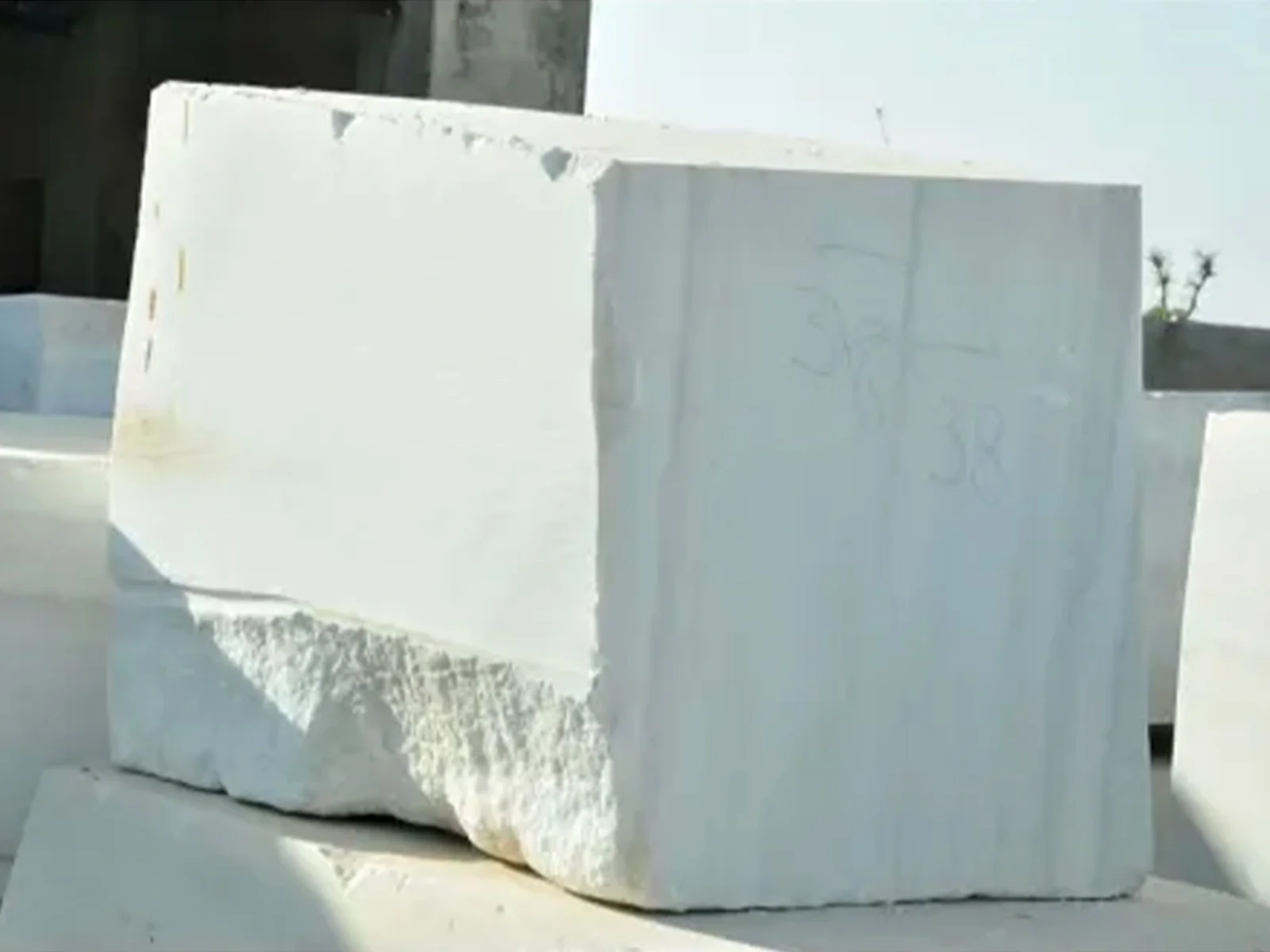
Ambaji Marble
Revering centuries of Jain and Hindu pilgrimage craftsmanship. Exceptional granular softness under chisel that enables paper-thin ceiling rosettes and ornate torana filigree.
- Best For: Intricate Ceilings, Toranas, Ornate Brackets
- Texture: Milky white to subtle grey-green veining
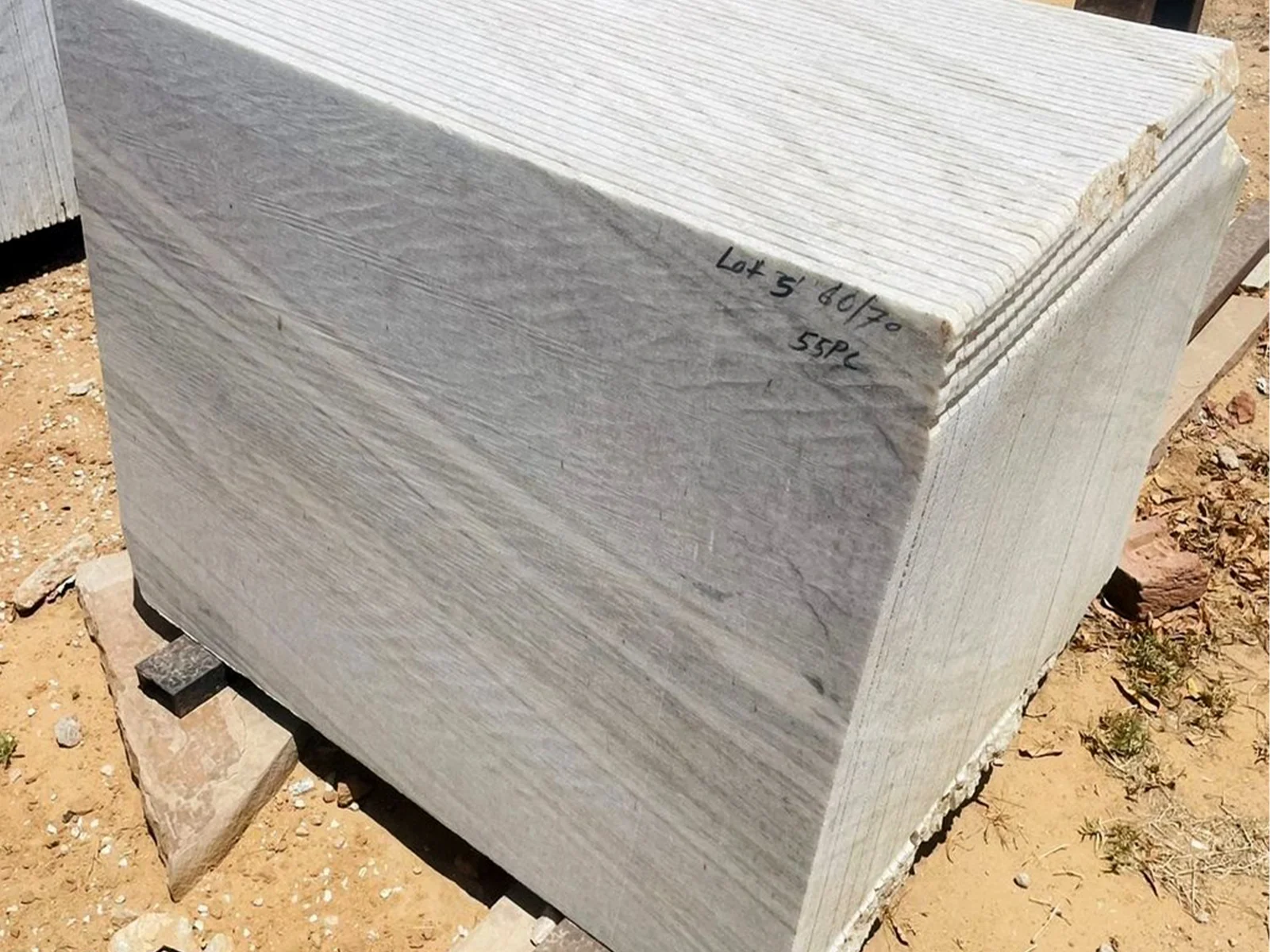
Kumari Marble
Renowned for remarkable structural hardness and resilient crystal formation, Kumari marble is ideal for heavy circumambulatory flooring, robust columns, and exterior claddings.
- Best For: Parikrama Pathways, Outer Mandapa Claddings
- Texture: Homogeneous off-white with high abrasion resistance
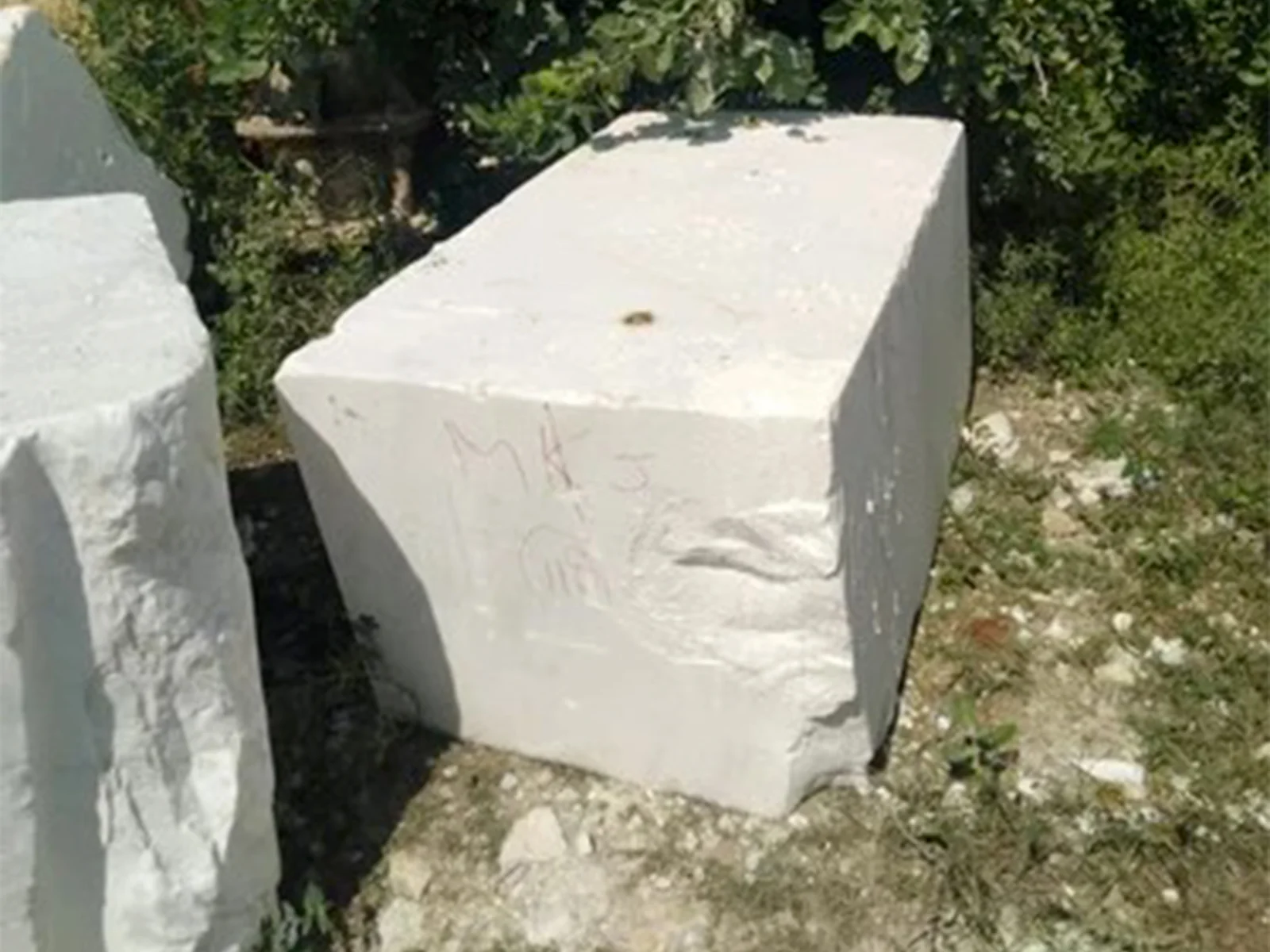
Rajnagar Marble
One of the world’s largest marble deposits. Features crystalline white base with characteristic smokey grey waves, ideal for large-scale temple flooring, courtyard pavilions, and perimeter walls.
- Best For: Extensive Pavilions, Courtyards, Perimeter Walling
- Texture: Coarse-to-medium crystalline with linear veining
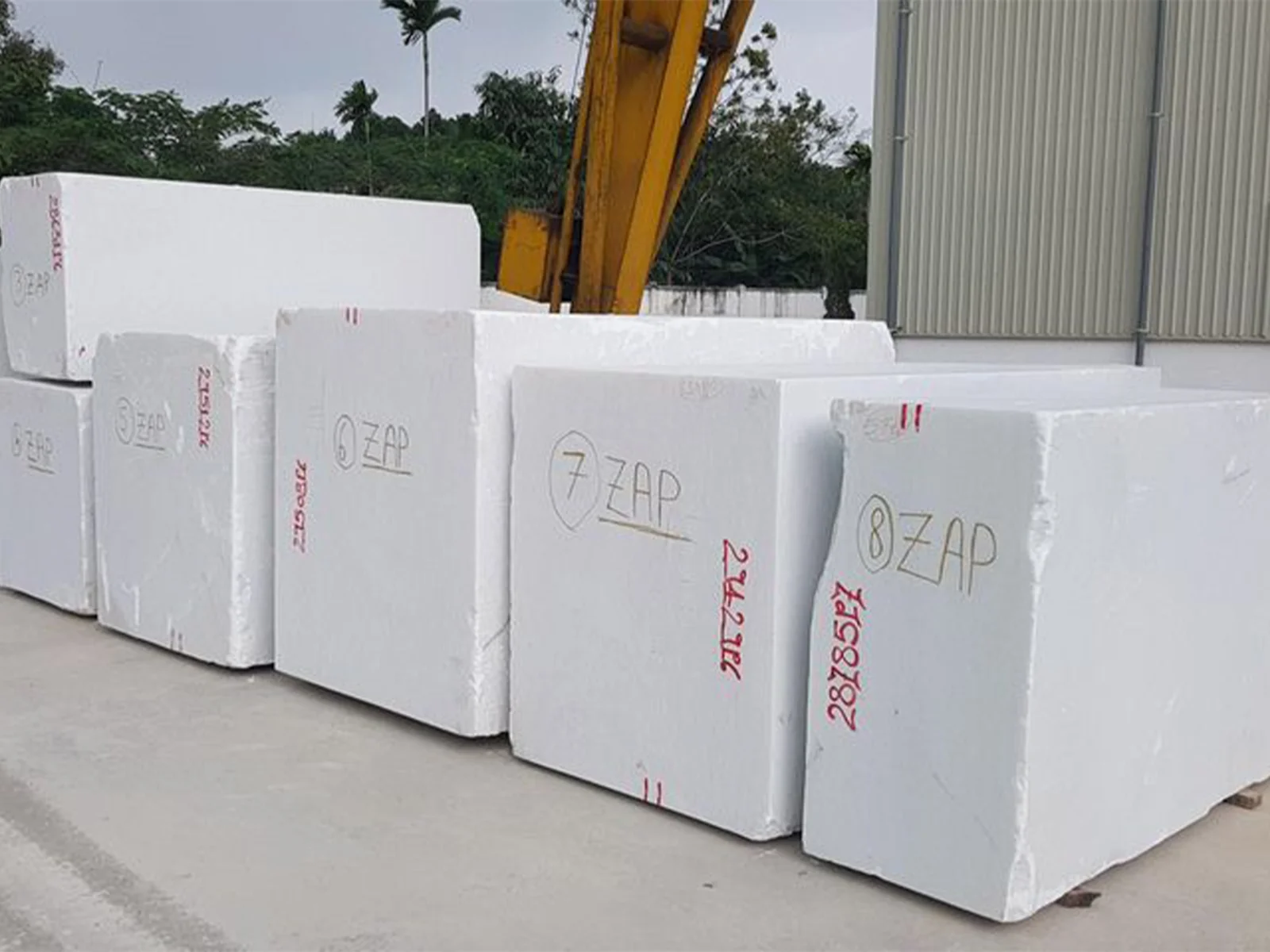
Vietnam Marble
Globally sought after for seamless, snow-white consistency with virtually zero vein interference. Extensively specified in modern monumental temple interiors, wall lining, and precision CNC relief.
- Best For: Modern Temple Sanctuaries, Mirror Flooring, Claddings
- Texture: Micro-crystalline, ultra-pure white luminescent surface
The Monumental Sandstone Collection
Sedimentary quartz-rich stone varieties that form the monolithic backbone of iconic North Indian Nagara and Maru-Gurjara shikharas and sculpted sanctums.
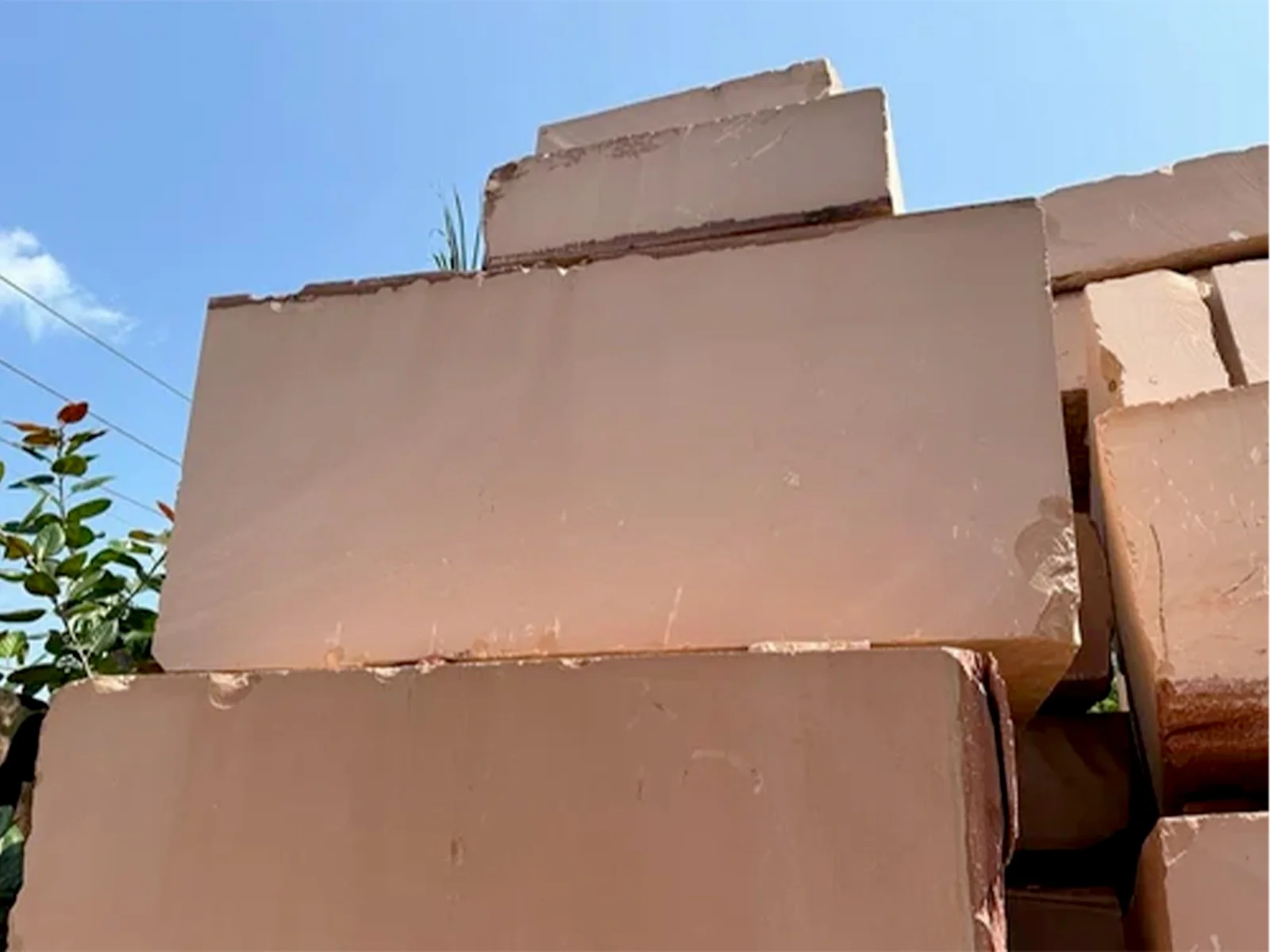
Bansi Paharpur Pink Stone
Revered across India for monumental temple shikharas. Infused with natural iron oxide imparting a majestic copper-pink hue that deepens gracefully through centuries of solar exposure.
- Best For: Nagara Shikharas, Mandapa Columns, Deep Reliefs
- Strength: High compressive tolerance & excellent frost resilience
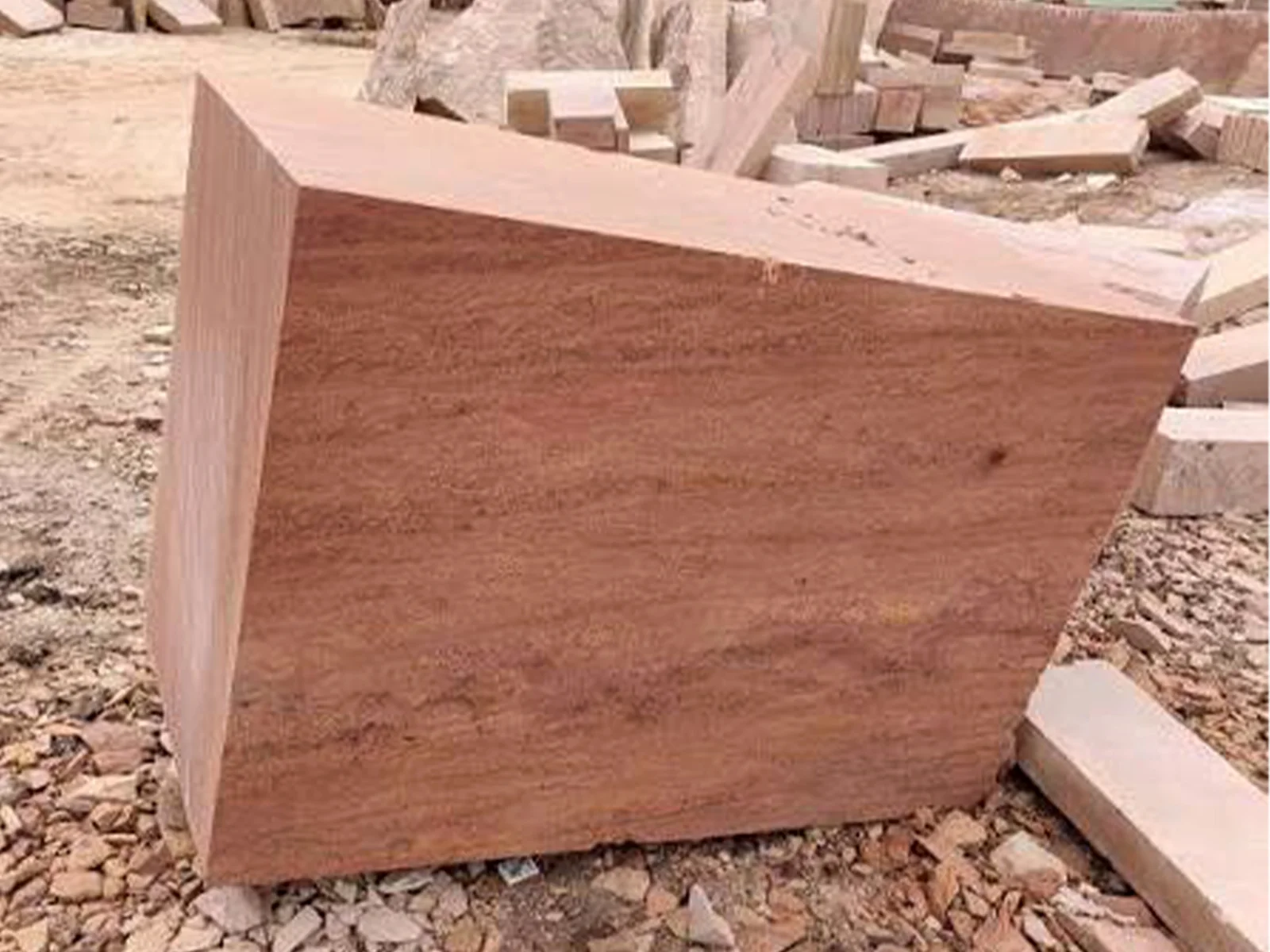
Dhrangadhra Sandstone
Kundan Shilp’s ancestral bedrock. Soft and supple when extracted, it hardens over decades upon atmospheric curing. The historic foundation stone of Gujarat’s classical Maru-Gurjara heritage.
- Best For: Temple Foundations, Carved Columns, Structural Slabs
- Raw Blocks: We also supply raw blocks via our quarry network
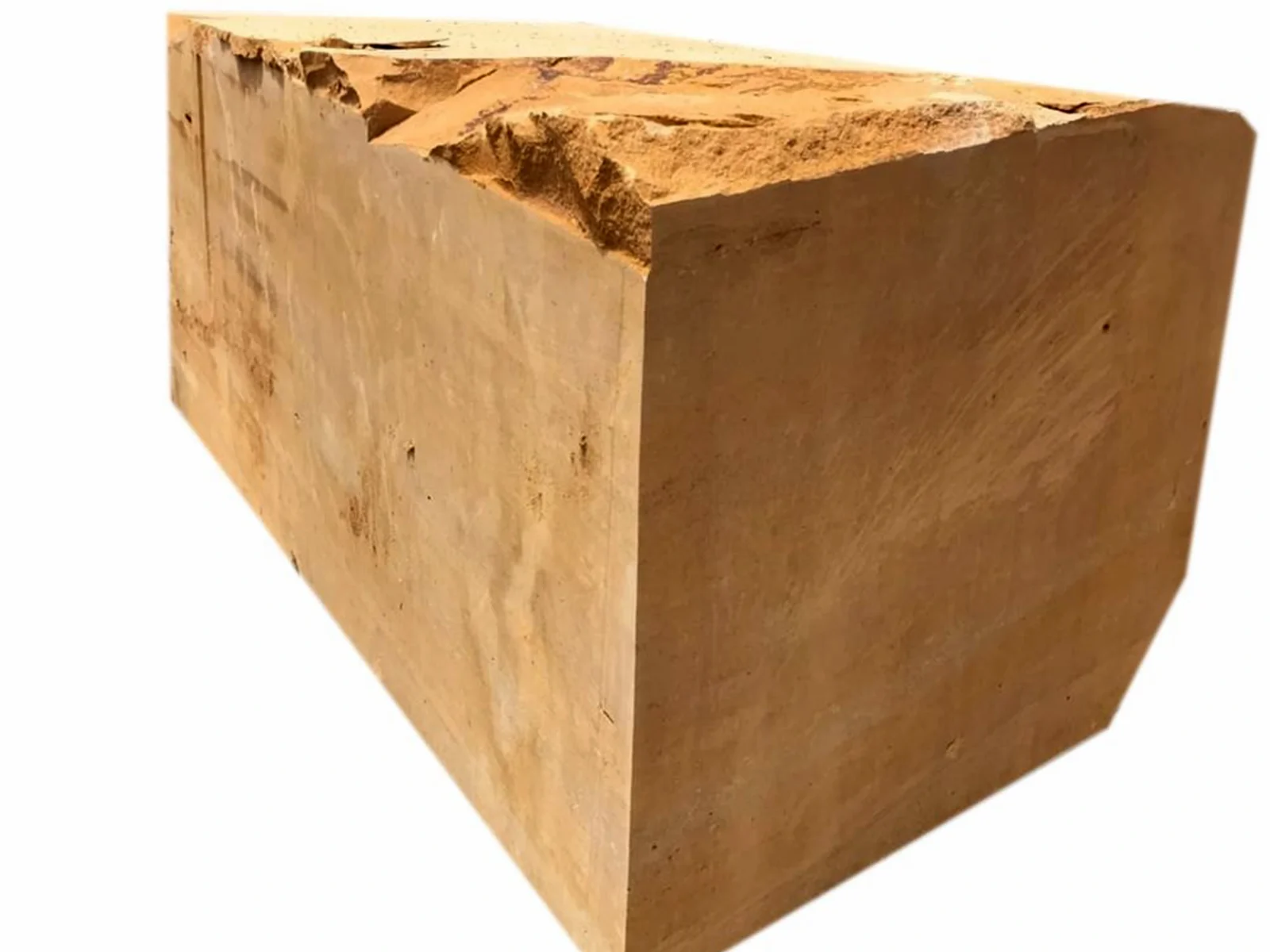
Jaisalmer Stone
The legendary "Golden Stone" of the Thar desert. Celebrated for its warm honey-amber luster, fine fossilized grain, and exceptional suitability for open courtyards, jharokhas, and sunlit façades.
- Best For: Intricate Jali Screens, Jharokhas, Ornate Façades
- Visuals: Luminescent golden-yellow that sparkles in sunlight
Architectural Stone Comparison Matrix
A cross-comparative technical overview of mineral composition, carving capacity, and recommended temple components based on Sompura structural tradition.
| Material Name | Geological Classification | Dominant Hue | Carving Resolution | Primary Temple Placement | Shastric Harmony |
|---|---|---|---|---|---|
| Makrana Marble | Pure Calcitic Metamorphic | Pure White / Subtle Grey Veins | Ultra-High (Sacred Murtis) | Garbhagriha, Main Deities, Pedestals | Pum-shila |
| Ambaji Marble | Fine Crystalline Calcite | Opaque White / Soft Green Accents | Exceptional (Deep Undercuts) | Ceilings, Mandapa Domes, Torana Arches | Stri-shila |
| Kumari Marble | Dense Dolomitic Marble | Subtle Warm White / Grey Bands | High (Relief Work) | Parikrama Flooring, Exterior Cladding | Resilient Matrix |
| Rajnagar Marble | Coarse-to-Medium Crystalline | Pearly White with Grey Waves | Moderate-to-High | Courtyards, Large Halls, Wall Cladding | Monumental |
| Vietnam Marble | Microcrystalline Pure Calcite | Uniform Flawless White | High Precision (CNC & Chiseling) | Contemporary Sanctums, Internal Lining | Contemporary |
| Bansi Paharpur Pink Stone | Siliceous Ferruginous Sandstone | Warm Terracotta Pink / Peach | Superior Architectural Relief | Nagara Shikharas, Superstructures, Pillars | Sacred Nagara |
| Dhrangadhra Sandstone | Fine Quartzitic Sandstone | Warm Buff / Golden Yellow / Cream | High (Hardens post-exposure) | Foundations, Jagati Plinths, Mandapas | Maru-Gurjara |
| Jaisalmer Stone | Fossiliferous Calcareous Sandstone | Rich Amber Gold / Ochre | Delicate Lattice & Jali Filigree | Jharokhas, Pierced Screens, Decorative Façade | Solar Luster |
The Kundan Shilp Material Protocol
We manage the entire chain of custody: geological verification, rough block selection, wire-saw sizing, manual master sculpting, and site-level dry-stone interlocking.
Quarry Face Grading
Assessing mineral strata, orientation, and removing weathered overburden layers to access pristine deep-bed blocks.
Diamond Wire Slicing
Precision multi-wire diamond sawing that eliminates shock fractures caused by obsolete blasting techniques.
Sompura Master Chisel
Translating Shilpa Shastra iconography into sacred three-dimensional stone sculpture with manual hand tooling.
Trial Assembly
Pre-erection dry-fitting at our workshop to verify interlocking tolerances prior to final on-site installation.
Temple Materials & Stone Sourcing FAQs
How are temple building stones classified under Shilpa Shastra?
Which marble is considered the most sacred for temple Garbhagriha shrines?
Why is Bansi Paharpur pink sandstone chosen for major Nagara-style temples?
What is the structural role of Dhrangadhra yellow sandstone in temple architecture?
Can imported marble like Vietnam White Marble be used in traditional Hindu temples?
How does Kundan Shilp verify stone quality before quarry block extraction?
Consult With Our Sompura Stone Specialists
Whether you are planning a grand community temple or a sacred marble sanctum, our architects provide material feasibility studies, stone sampling, and acoustic testing reports.